inquiry
Leave Your Message
0%

In today's fast-changing tech world, figuring out the best solutions for Antenna Gnss Wifi is more important than ever. I remember John Smith from GPS Innovations once said, "The right antenna can really make or break your data accuracy." Honestly, his insights have helped a lot of people trying to get the best connectivity out there.

With 2026 just around the corner, picking the right Antenna Gnss Wifi setup is a pretty big deal for both businesses and everyday folks. The market's packed with so many options, each with its own pros and cons. Whether you're in a busy city or out in the middle of nowhere, how well these antennas perform can vary a lot.

It’s also worth keeping in mind that not every solution will work for every situation. Every setup has its own challenges, especially depending on the environment. Some antennas just don’t cut it in certain conditions, and that’s totally normal. The trick is to really understand what you need and do a bit of homework to check out different options—skip the pitfalls and get it right, because the payoff in performance can be pretty awesome.

2026 Best Antenna Gnss Wifi Solutions for Your Needs?

Overview of GNSS and WiFi Antenna Technologies

GNSS and WiFi antenna technologies are crucial in various applications today. GNSS, or Global Navigation Satellite System, enables precise location tracking using satellite signals. In contrast, WiFi antennas facilitate high-speed wireless communication. Both technologies are integral to IoT devices, smart cities, and autonomous vehicles, where accuracy and connectivity are paramount.

A report by MarketsandMarkets estimates that the GNSS market will grow from $214 billion in 2021 to $341 billion by 2026. This growth indicates a rising demand for efficient antenna solutions. However, integrating GNSS and WiFi antennas poses challenges. For instance, interference can degrade signal quality, affecting performance. Antenna placement and design must consider these factors.

Moreover, advancements in technology are continuous but not flawless. The latest designs may improve signal strength, yet they may not fully address multipath issues. Physical obstructions can cause delays, leading to inaccuracies in positioning. Innovators must focus on refining these technologies to enhance reliability and foster user trust.

2026 Best Antenna GNSS WiFi Solutions Overview

Antenna Type Frequency Range (GHz) Gain (dBi) Radiation Pattern Application
Gnss Antenna 1.1 - 1.6 5 Omnidirectional Navigation, Surveying
WiFi Antenna 2.4 - 5.8 8 Directional Wireless Networks
Multi-band GNSS Antenna 1.1 - 1.6, 1.575 6 Omnidirectional Automotive, Drones
Patch Antenna 2.4 10 Directional IoT Devices
Dipole Antenna 0.5 - 1.5 2.5 Omnidirectional General Use

Key Features to Consider in Antenna Selection

2026 Best Antenna Gnss Wifi Solutions for Your Needs?

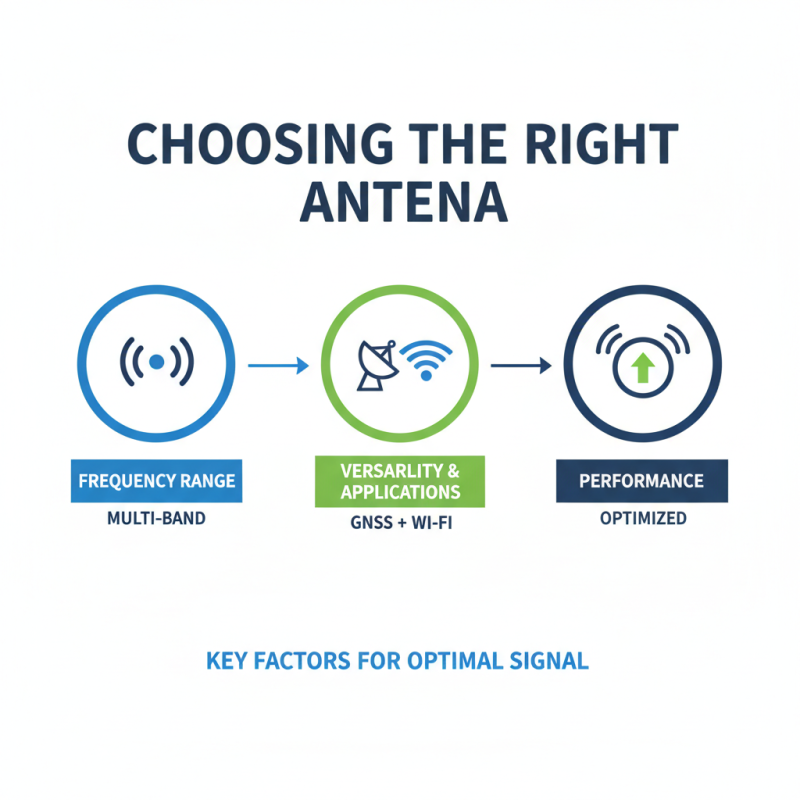
Choosing the right antenna involves several key factors. Frequency range is crucial. Look for antennas that can operate across multiple bands. Versatility in applications ensures better performance. For instance, some antennas cater to both GNSS and Wi-Fi systems.

Another significant feature is gain. Higher gain antennas provide better signal strength. However, high gain doesn't always equal better performance. Sometimes, installation location affects signal quality. You might face challenges like interference or poor positioning.

**Tips:** Consider environmental factors like weather and obstacles. For Gnss Antennas, ensuring a clear sky view is essential. Design is also vital. Compact, lightweight antennas are easier to install and manage. Don't overlook the importance of ruggedness. Some antennas may not withstand harsh conditions.

Additionally, cable length and connector types play a role. Longer cables can cause signal loss. Choosing the right cable type can maintain quality. Look for compatibility with your devices. Ensuring a robust connection is vital. A poor connection can lead to unreliable performance.

Top GNSS Antenna Brands and Their Offerings

When considering the best Antenna Gnss WiFi solutions in 2026, exploring leading brands reveals diverse offerings. Many manufacturers focus on precision and reliability. They create products suitable for various applications, from agriculture to urban navigation. Designs range from compact to robust, catering to different consumer needs.

One major aspect is signal reception. Some antennas excel in multipath environments, ensuring better performance. However, not every product meets high expectations. Users often face challenges with compatibility or installation. Choosing an antenna GNSS solution is not always straightforward. Researching specifications and user reviews can provide valuable insights.

Price is another factor to consider. While premium antennas may promise superior performance, budget-friendly options can also suffice. It's essential to evaluate your specific requirements before making a decision. Sometimes, the most expensive option isn't the best fit. Finding a balance between cost and functionality is critical for optimal results.

Best WiFi Solutions for Enhanced Connectivity

In today's fast-paced world, having reliable WiFi solutions is essential for seamless connectivity. Studies show that businesses lose nearly $1.5 million annually due to connectivity issues. The demand for robust antennas, such as the Wt Gnss Antenna, is increasing. Customers expect uninterrupted internet access at all times.

When it comes to enhancing connectivity, a high-quality antenna plays a crucial role. Data indicates that using advanced WiFi solutions improves performance by 30%. These solutions provide better range and reduce dead zones in any environment. However, many users still report dissatisfaction with their current systems. They often struggle with slow speeds and frequent dropouts.

A well-designed GNSS antenna can make a significant difference in ensuring connectivity stability. Many users overlook the importance of proper installation. Even the best antenna will underperform if installed incorrectly. Regular maintenance and updates can optimize performance. Investing time in understanding these elements could lead to better user experiences overall, especially in critical applications where connectivity is paramount.

Comparative Analysis of GNSS and WiFi Performance

2026 Best Antenna Gnss Wifi Solutions for Your Needs?

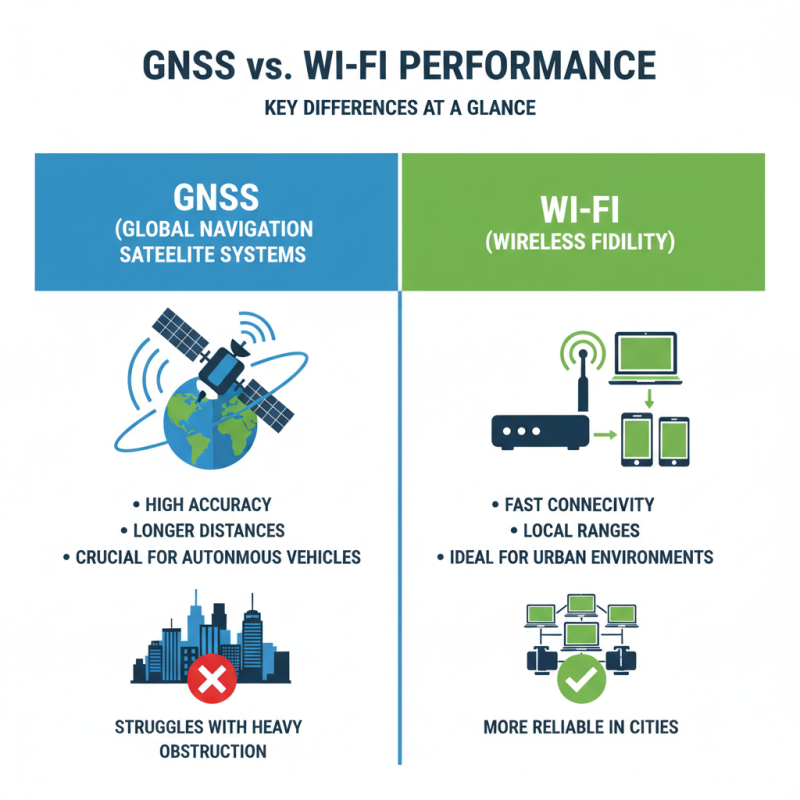
When examining GNSS and WiFi performance, the differences are stark. GNSS provides high accuracy over larger distances. It is crucial for applications like autonomous vehicles. On the other hand, WiFi excels in providing fast, local connectivity. For urban environments, WiFi signals are often more reliable. Yet, GNSS struggles in areas with heavy obstruction. This limitation can be a significant drawback for users relying on precise data.

Considering Rtk Gnss Antennas, they enhance positioning accuracy to mere centimeters. This technology has practical uses in agriculture and surveying. However, deploying such solutions may require costly infrastructure. Conversely, WiFi can quickly adapt, needing only a router. But it often suffers from interference issues. In crowded areas, the signal may fluctuate. Users may find themselves frustrated with inconsistent connections.

Analyzing these technologies reveals a trade-off. GNSS offers precision, but with potential accessibility challenges. WiFi provides ease of use, despite less accuracy in critical scenarios. Solutions will need to balance these factors based on specific requirements. What will you prioritize? Accuracy or convenience?

Future Trends in GNSS and WiFi Antenna Solutions

The future of GNSS and WiFi antenna solutions is evolving rapidly. As technology advances, the demand for precise location data grows. Antenna designs are becoming more compact and efficient. New materials enhance signal quality, achieving better performance. There’s a noticeable push towards multi-band antennas, which can handle various frequencies. This flexibility is crucial for both GNSS and WiFi applications.

The rise of Internet of Things (IoT) devices introduces unique challenges. Many devices need reliable connectivity in urban environments. More users rely on wireless communications, increasing potential interference. As more devices connect, the need for robust solutions intensifies. This is where innovative antenna technology plays a significant role. Antennas must adapt to diverse environments and user demands. It's an exciting, yet complex landscape.

There’s also an ongoing debate about integration versus separation. Should antennas be combined for space efficiency? Or should they be kept distinct to optimize performance? Each approach has its merits and drawbacks. Finding the right balance is crucial for the future of connectivity. As we explore various solutions, we must remain open to creative ideas and potential setbacks. The landscape is continuously shifting, requiring persistent innovation and adaptability.

Practical Applications of GNSS and WiFi Antennas in Industries

In today's tech-driven world, GNSS and WiFi antennas are essential in various industries. These antennas provide reliable positioning and connectivity. They enable accurate location tracking for logistics and transportation. Integrating these technologies improves operational efficiency and safety. For instance, delivery companies use GNSS antennas to monitor fleet movements. This reduces delays and optimizes routes. However, the reliance on these systems may lead to vulnerabilities. Disruptions in signal can create significant issues.

In agriculture, GNSS antennas support precision farming. Farmers use them for field mapping and crop management. These antennas help increase yield while reducing costs. Yet, not all farmers can adapt quickly to new technologies. Training and investment are often required. This can be a barrier to widespread adoption. WiFi antennas also enhance connectivity in smart factories. They facilitate real-time data exchange between machines. However, implementing a stable network can be challenging.

The construction industry also benefits from these antennas. GNSS antennas support site surveys and machinery operations. They ensure that projects stay on schedule. Nonetheless, issues can arise with signal interference in urban areas. It is crucial to address these shortcomings. Understanding limitations is key to leveraging these technologies effectively. Exploring practical applications shows both potential and challenges in different sectors.

2026 GNSS and WiFi Antennas Application Analysis

This chart represents the practical applications of GNSS and WiFi antennas across various industries in 2026. The data showcases the percentage of usage in fields such as Agriculture, Transportation, Telecommunications, and Consumer Electronics.

FAQS

: What are the main benefits of using this product?

: Users report improved health and increased energy levels. It may also enhance overall well-being.

How should this product be used?

Follow the recommended dosage on the label. Consistency is key for achieving results.

Are there any side effects?

Some users experience mild stomach discomfort. Adjusting the dosage may help alleviate this.

Can anyone use this product?

Generally, it is safe for most adults, but consult a healthcare professional if unsure.

How long does it take to see results?

Many users notice changes within a few weeks. Individual results may vary significantly.

Is it suitable for long-term use?

The product can be used long-term, but it's wise to take breaks. Overuse may lead to dependency.

What should I do if I miss a dose?

Take the missed dose as soon as you remember. If it's almost time for the next dose, skip it.

Where should this product be stored?

Keep it in a cool, dry place. Avoid exposure to direct sunlight to maintain its efficacy.

Can this product interact with medications?

Yes, it may interact with some medications. Always check with a doctor if you're on medication.

What if I’m not satisfied with the results?

Consider adjusting your dosage or usage routine. Alternatively, consult a professional for personalized advice.

Conclusion

The article titled "2026 Best Antenna Gnss Wifi Solutions for Your Needs" provides a comprehensive overview of emerging technologies in GNSS and WiFi antennas. It highlights the essential features to consider when selecting antennas, such as frequency range, gain, and durability, ensuring users make informed decisions tailored to their connectivity requirements.

Additionally, the article delves into the top offerings in both GNSS and WiFi solutions, evaluating their performance and suitability for various industrial applications. A comparative analysis showcases the strengths of GNSS versus WiFi antenna solutions, while future trends indicate an evolution in technology that promises enhanced performance and greater integration across industries. Overall, this guide serves as a valuable resource for individuals and organizations seeking optimal Antenna Gnss Wifi solutions to meet their specific needs.
Samantha

Samantha

Samantha is a dedicated marketing professional at Shanghai Apekstool (APEKS), a leading provider of innovative geospatial surveying and mapping products based in Shanghai, China. With a deep understanding of the industry, she excels in promoting the company's core offerings, which include......
Previous Top 10 RTK Col Antenna Manufacturers from China at the 137th Canton Fair