You might have come across the Antenna Gnss Wifi — it’s really changing how we stay connected these days. More and more, businesses depend on knowing exactly where they are and keeping a stable internet connection. And here’s the cool part: this technology does both, offering GPS (GNSS) and WiFi in one handy device, making communication super smooth.
If you wanna get the hang of how it works, it’s good to know that at its core, this antenna combines satellite signals with WiFi signals. It helps gather location info that makes navigation and logistics way better. Honestly, the benefits are pretty impressive — they help everything from smarter cities to more efficient deliveries.
Of course, it’s not all smooth sailing. Environmental stuff, like weather or obstacles, can mess with its performance. So, having a good grasp of the tech is definitely important. As we keep exploring and improving these systems, it’s clear we need to keep adapting. Embracing these new advancements really sets the stage for a more connected, smarter future — and honestly, I think it’s pretty exciting!

What is a Wholesale Antenna GNSS Wifi?
Wholesale antennas for GNSS and WiFi are specialized devices used for both positioning and communication. These antennas are crucial in sectors such as navigation, surveying, and telecommunications. They collect satellite signals to determine precise locations. According to industry reports, the GNSS market is projected to grow by over 8% annually, reflecting the increasing reliance on positioning technology.
The concept of wholesale antennas implies bulk purchasing, catering to businesses needing extensive GNSS infrastructure. Such antennas are designed to deliver high-performance signals, often prioritizing quality over cost. By using multiple frequency bands, they enhance accuracy and reliability, which is essential in applications like autonomous vehicles and drone operations. A recent study highlighted that systems equipped with quality Gnss Antennas can improve location accuracy by up to 20%.
Tip:When selecting a
Gnss Antenna, consider factors like gain, frequency range, and environmental durability. Always conduct research to evaluate the best options available.
Incorporating wholesale antennas can streamline operations in various industries. However, potential pitfalls include mismatched specifications and installation challenges. It’s vital to consult with experts to ensure optimal performance. Investing in a quality GNSS antenna can yield long-term benefits, but careful planning is crucial.
Key Features of Wholesale Antenna GNSS Wifi
Wholesale Antenna Gnss Wifi combines Global Navigation Satellite System (GNSS) technology with WiFi connectivity. This innovative antenna allows for precise location tracking and reliable internet access. It’s particularly useful in sectors like transportation, agriculture, and smart city applications.
Key features of this technology include high sensitivity and multi-band capabilities. These antennas can receive signals from multiple GNSS satellites, enhancing accuracy. They often integrate seamlessly with existing WiFi networks. This dual functionality makes them versatile options for various applications.
Tips for choosing an effective Wholesale Antenna Gnss Wifi include assessing the environment of use. Urban areas can disrupt signals, so an antenna with robust urban penetration is essential. It’s also important to focus on compatibility with your devices. Not all antennas work with every system, so verify specifications beforehand.
Consider the mounting options available for these antennas. Depending on your location, some designs will suit better than others. Understanding your specific needs can lead to better performance.
How GNSS Technology Integrates with Wifi Antennas
GNSS technology has become essential in various applications, including positioning, navigation, and timing. Integrating GNSS with WiFi antennas enhances location accuracy in urban environments. According to a recent report by the International Global Navigation Satellite Systems (GNSS) Forum, approximately 90% of smartphones rely on GNSS for navigation. This integration allows for seamless data exchange between GNSS signals and WiFi infrastructure.
WiFi antennas equipped with GNSS capabilities can improve indoor positioning systems. These antennas receive signals from satellites and provide users with real-time location data. The combination of GNSS and WiFi broadens the potential for smart city applications. A study by ABI Research shows that the demand for precise indoor location data is expected to grow by over 30% in the next five years.
Tips: Always consider environmental factors when using GNSS-enabled systems. Urban canyons can obstruct signals. Regularly updating software is vital to ensure optimal performance and accuracy in location services. Additionally, manufacturers should remain flexible in design to adapt to technological advancements. This will promote reliability and efficiency as user expectations evolve.
The Working Principles of Wholesale GNSS Wifi Antennas
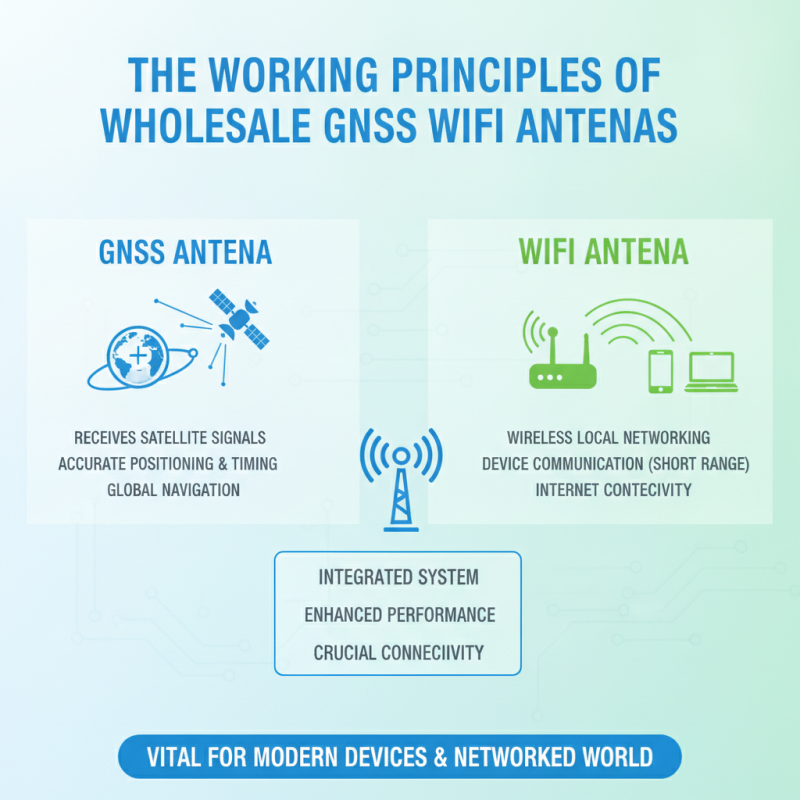
Wholesale GNSS WiFi antennas serve as crucial components for various applications, providing vital connectivity in an increasingly networked world. Their operation is based on principles of satellite navigation and WiFi technology. GNSS (Global Navigation Satellite System) antennas receive signals from satellites, ensuring accurate positioning and timing. WiFi antennas, on the other hand, facilitate wireless local area networking, allowing devices to communicate within a short range. Integrating these technologies allows for enhanced performance in modern devices.
Reports indicate a 25% increase in the demand for GNSS WiFi antennas from 2020 to 2023. This growth can be attributed to the rising adoption of smart devices and IoT applications. The combined functionality of GNSS and WiFi antennas streamlines operations across various sectors, including transportation and logistics, where precise location data is essential. However, challenges remain. Interference from urban environments can impact signal reliability. Moreover, as the technology evolves, maintaining compatibility across various platforms can be complex.
Effective deployment of GNSS WiFi antennas hinges on understanding their operational principles. For instance, different frequency bands may affect their performance efficiency. Industry reports highlight that utilizing high-quality antennas can reduce the error margin in position data by up to 30%. Balancing cost, performance, and reliability is essential for businesses looking to leverage these antennas effectively.
Applications of Wholesale Antenna GNSS Wifi in Various Industries
Wholesale Antenna GNSS WiFi has gained traction across various sectors. Its applications are diverse, from agriculture to logistics. In agriculture, farmers use these antennas for precision farming. They enable accurate positioning, which helps with planting and harvesting. This leads to better crop yields and reduced waste.
In the logistics sector, Wt Gnss Antenna enhances fleet management. GPS data provides real-time tracking of vehicles. This reduces delays and improves efficiency. Companies can monitor routes and adjust schedules, ensuring timely deliveries. The reliability of GNSS technology is vital in maintaining smooth operations.
Tip: Consider the installation environment for optimal performance. Antennas should be placed where signals are strong and unobstructed.
The construction industry also benefits. GNSS technology aids in site surveying and mapping. Accurate data minimizes errors during construction projects. However, reliance on technology can lead to complacency. Regular checks and manual assessments remain crucial for accuracy.
Tip: Regular training for staff on GNSS systems is beneficial. Ensuring everyone understands the technology can prevent operational mishaps.
Benefits of Using Wholesale Antenna GNSS Wifi Solutions
Wholesale Antenna GNSS Wifi solutions offer significant benefits for various applications. These antennas provide Precise Positioning data and robust wireless communication. They are ideal for businesses that rely on GPS and WiFi for accurate location tracking and data transfer.
One key benefit is enhanced connectivity. Wholesale antennas improve signal strength and coverage, which is vital for urban environments. Users experience fewer dropouts and a more stable connection. This can boost productivity and ensure reliable performance in critical operations.
Tip: When selecting an antenna, consider the specific frequency band it supports. Different applications may require different frequency ranges.
Another advantage is cost-effectiveness. By purchasing in wholesale, businesses can reduce expenses. The savings can then be invested in other essential tools or technologies. Additionally, using these solutions can streamline operations, leading to faster project completion.
Tip: Regularly check for updates in antenna technology. Staying informed can help you choose the best equipment for your needs.
In summary, Wholesale Antenna GNSS Wifi solutions enhance connectivity and reduce costs, making them a smart choice for businesses. The focus on accurate data and reliable communication paves the way for improved efficiency.
Benefits of Wholesale Antenna GNSS Wifi Solutions
This bar chart illustrates the various benefits of using wholesale antenna GNSS Wifi solutions, including increased coverage, enhanced accuracy, cost efficiency, easy integration, and scalability, measured in percentage effectiveness.
Factors to Consider When Choosing a Wholesale GNSS Wifi Antenna
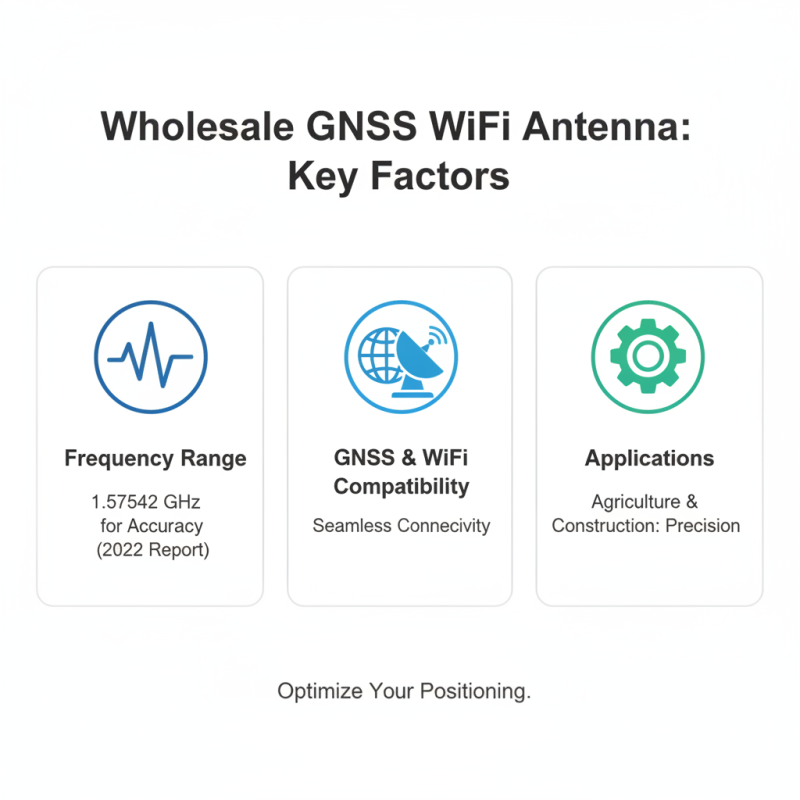
When considering a wholesale GNSS WiFi antenna, several factors are crucial. The frequency range is one of them. Antennas operate in various frequency bands, affecting their performance. A 2022 market report highlighted that antennas operating within the 1.57542 GHz band offer optimal accuracy for positioning applications. This is essential for sectors like agriculture and construction, where precise location data is vital.
Another important aspect is the gain of the antenna. Higher gain values typically indicate better signal reception and transmission. For example, antennas with a gain of 5 dBi or more are ideal for long-distance communication. In contrast, lower gain antennas may suffice for shorter-range applications but could lead to signal loss under challenging conditions. Data from industry studies show that using an Rtk Gnss Antenna can improve positioning accuracy by up to 20%, demonstrating the direct impact of gain on performance.
Durability is also a key consideration. Antennas must withstand harsh environmental conditions. Materials like UV-resistant plastics and stainless steel are preferable. According to the 2023 Antenna Performance Report, antennas made from quality materials have a lifespan of over a decade. Cheaper options may fail sooner, leading to increased replacement costs. Assessing these elements ensures a reliable and efficient GNSS WiFi solution.
Maximizing Efficiency in Surveying: A Deep Dive into the AP10 GNSS Receiver for Diverse Applications
The AP10 Gnss Receiver stands out as a powerful and cost-effective tool designed to maximize efficiency in surveying applications. It delivers highly productive real-time kinematic (RTK) capabilities suitable for diverse environments, from urban construction sites to sprawling topographical surveys. According to the International Federation of Surveyors, the adoption of GNSS technology has significantly enhanced the accuracy and efficiency of surveying processes, allowing professionals to achieve precision levels within centimeters.
Incorporating advanced algorithms and robust satellite tracking features, the AP10 GNSS Receiver excels in challenging conditions, effectively managing multipath and signal obstructions that often plague surveying tasks. A report from the National Oceanic and Atmospheric Administration highlights that modern GNSS solutions can reduce post-processing time by up to 50%, translating to substantial cost savings and improved project timelines. This is particularly vital for stakeholders in mapping and construction, where time and accuracy directly impact operational efficiency and ROI.
Moreover, the versatility of the AP10 GNSS Receiver makes it an ideal choice for various applications, including mapping topographies, guiding construction layouts, and facilitating precise stakeout operations. With the industry increasingly demanding faster and more reliable surveying tools, the ability of the AP10 GNSS Receiver to adapt to multiple applications positions it as a key player in the advancement of surveying technologies, ultimately driving productivity and enhancing overall project outcomes. As surveying continues to evolve, leveraging such innovative solutions will be essential for professionals aiming to stay ahead in a competitive landscape.
FAQS
: They are specialized devices for positioning and communication, crucial in navigation and telecommunications.
GNSS antennas receive satellite signals to ensure accurate positioning and timing information for various applications.
The demand has grown due to the rise of smart devices and IoT applications, requiring precise location data.
Look for gain, frequency range, and environmental durability. Research is essential to find the best options.
Mismatched specifications and installation challenges can occur. Consulting with experts is vital for optimal performance.
Quality antennas can enhance location accuracy by up to 20%. They play a significant role in various applications.
WiFi antennas facilitate local area networking, allowing devices to communicate wirelessly within a short range.
Yes, urban interference can impact signal reliability, making it challenging to maintain performance.
Businesses need to balance cost, performance, and reliability to utilize these antennas effectively.
Sometimes lower-cost options may compromise quality, leading to issues with performance that need reevaluation.
Conclusion
A Wholesale Antenna GNSS Wifi is a specialized device that combines Global Navigation Satellite System (GNSS) technology with WiFi capabilities, enabling precise location tracking and wireless data transmission. These antennas are designed with key features such as enhanced signal strength, multi-frequency support, and compatibility with a variety of devices. Understanding how GNSS technology integrates with WiFi antennas reveals the potential for numerous applications across various industries, from transportation to agriculture, where accurate positioning and reliable connectivity are essential.
The working principles of wholesale GNSS Wifi antennas involve receiving satellite signals and transmitting data wirelessly, thus facilitating seamless communication and precise navigation. The benefits of using these solutions include improved operational efficiency, enhanced data accuracy, and cost-effectiveness. When selecting the right wholesale GNSS Wifi antenna, it's crucial to consider factors such as environmental conditions, integration requirements, and scalability to ensure optimal performance for specific applications.